Showing posts with label Literacy. Show all posts

Ready for SMORE fun in kindergarten?

Time to start thinking about the new school year! My start of the school year has to do with s'mores. It all began with my s'more obsession at the end of last school year. I went on a s,more kick- drinking Dunkin Donuts S'mores Iced Coffee and eating S'mores pop tarts. (I don't even eat pop tarts!) I was so excited to find out that National S'mores Day is Thursday, August 10th. Which is the first day of school in my district!!!

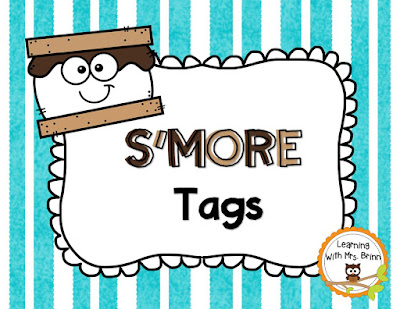
I made these tags to go on some treats for the first day of school. Click on the picture to get to the freebie.

https://drive.google.com/file/d/0B9ORGQbk5uVmcU02SmxwMTJVejQ/view?usp=sharing

https://drive.google.com/file/d/0B9ORGQbk5uVmcU02SmxwMTJVejQ/view?usp=sharing

Since I am at a Leader in Me school, I made a back to school s'mores board. At the end of the last school year, I had my kindergarten students write a tip about being a leader for my new students. At the beginning of this school year, I plan to have my new kindergartners brainstorm ways to be a kindergarten leader and make their own s'mores for this bulletin board.


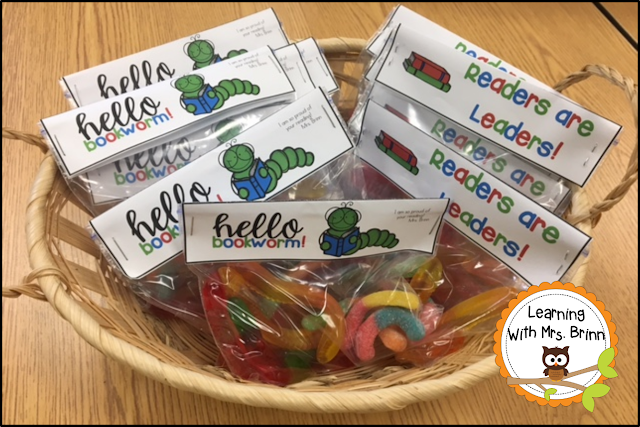
Talking about last year's group, I gave them a summer reading challenge. I made some bookworm tags to go with their prizes of reaching their goal of 50 books read over the summer. Click on the picture to get that tag freebie.

https://drive.google.com/file/d/0B9ORGQbk5uVmcWdHSkszS0M4OFE/view?usp=sharing

 Life has been a little bit more joyful with this little puppy! Meet Daisy, our Shihtzu. We got her late April and she has stolen our hearts! I am busy making different little bows for her to wear. I opened up an Etsy shop- TturtleTimeCreations. Below are some bows I made for my aunt's pups, Cherie and Caleb.

I have one week of summer left before I go back to CGI training and then Pre-planning! Enjoy the summer!


0

Daily 5 Chapter 3


1. Establish a gathering place for brain and body breaks. 
I just call it our meeting area. I've also called it "the carpet". I do like the idea of giving it a name. Perhaps, my new students will help think of a name for our meeting area.

2. Developing the concept of "good fit" books.
 The shoe concept is a great visual for teaching "good fit" books. I also like Tammy's (from Live Love Laugh Everyday in Kindergarten) suggestion to use Goldilocks and the 3 Bears concept too. Click on her linky party link above to go to her site. If you haven't been there yet, you're missing out. She has some great freebie visuals on this concept.
 
3. Create anchor charts with students. How will these be visual in the room? Where will you store them? What about small spaces?
After creating an anchor chart, I usually hang them on the whiteboard or up on our lights. Sometimes I create them on the computer and display them on the tv screen for students to reference during the time they may need them. Some anchor charts I send home with my students when we are done with them. Some anchor charts are put on hangers and put in my poetry/chart center. In the past, I have taken pictures of my math charts and put them into a classbook. If I did this with my all my charts, then I would have a reference of what I have done in the past. 

Here's a picture of my poetry stand. It is like a clothes hanging stand. I do not have a side view... sorry! It shows where we display the main poem or anchor chart we are using at the moment. Behind it, is a wooden bar that holds all my charts. I have them categorized. My students know they may use the charts at the front, near the hanging place for the chart. This is where I keep my student of the day charts, poems, and anchor charts. Separating the front from the back is a bunch of empty hangers waiting to house  a chart. At the back, I keep all other poems and charts for the year, waiting to be introduced.

 
4. Short, repeated intervals of independent practice and setting up book boxes. (How are you going to keep track of stamina? What will you use for book boxes? What are you going to put in those book boxes on the 1st day of school? 
I haven't officially kept track of stamina with my students. At the beginning of the year, we discuss and work our way up to 15 minutes, then as they matured and learned to read, they were capable of reading for longer periods of time. Last year, I purchased white book boxes from IKEA for each of my students with the intention of following Daily 5's recommendation of book boxes. Then my class quickly grew from 18 to 32 students. So, I did away with the book boxes and used ziplock bags instead. I have had chair covers in previous years be their "book boxes". In addition to book boxes, I also have group blue baskets of books. I use a "DEAR" (Drop Everything And Read) concept, following a 4 Blocks "Self-Selected Reading" for Daily5 Read to Self. At the beginning of the year, I gather books from my personal stash, Harcourt resources, and the library. There is a variety of books, ranging from easy readers, magazines, and picture books that I place in the baskets. I do not put any chapter books in kindergarten, until I see a need for it. My kindergartners make many easy readers at the beginning of the year. Those are the first books that are placed in their book box or ziplocks (which are kept in the group blue baskets). I do like having group baskets. Even though some children are not reading words, they can read pictures. After a reading group, I usually put our guided reading books into the group baskets. After reading a book to my class, I put copies into each group basket. My students love to reread these books.

5. Calm Signals and check in procedures. Do you already have a signal? How will you handle check ins? 

I use music for transitions. Dr. Jean has some great ones. I also play the xylophone or sing a tune to get their attention for a quick moment when needed. When I first start off teaching Daily5 concepts to my students, I am usually monitoring and checking in with my students. I start weening off after I have helped them learn "ask 3 before me", use anchor/direction charts, and how to get my attention for a problem that hasn't been solved. I discuss with my students they may interrupt me for an emergency. If they have a problem and the other ways did not help, they may stand by me and I may be able to answer them. We role play different situations and discuss ways to solve these problems. So besides that, I don't have calm signals or check in procedures, unless it was something discussed with one particular child needing that extra support. I am looking forward to reading what others do in this area!

6. Using the correct model/incorrect model approach for demonstrating appropriate behaviors.  I do not keep track of inappropriate behavior, unless I need to for RTI. Instead, I have to think about why the child is misbehaving: attention? work too hard? work too easy? enough or too much choice? social issues? Then we discuss ways to solve our problems or I adjust materials available to my students. If a child needs attention, then usually I have them on some type of positive behavior plan. Sometimes, I may pair a child with a partner.


On a different note, I just spent 3 days in a Got Mimio? workshop. I am excited about being able to do more with my Mimio software! I don't have the interactive part just yet, but I hope to get some updated technology in my classroom soon! They have a great piece where students record themselves to demonstrate their understanding. I think this could be used for small groups to work in creating anchor charts for Daily 5. Just wondering how you would tie in using an interactive whiteboard with Daily 5?
1

Daily 5 Introduction


I spent my morning lost in Daily 5 resources online. Click on the above picture to loose yourself in Daily 5 ideas. Tammy at Live, Love, Laugh Everyday in Kindergarten is hosting this Daily 5 linky party, and  I am so happy to have found it! After spending hours looking and reflecting about how I use Daily5 in my classroom, I decided to join in on the fun! I do not have my Daily5 book with me, as it is in my classroom. I read it a few years ago, and this would be a great time for me to revisit it as I have not grown the past 2 years from a Daily3... not quite enough time in my literacy block to do it all everyday!! All five components are included into my daily literacy block, but my students choose two to participate in. We all start with the read to self part.

Here are my responses to Chapter 1 Questions:
1. How do I teach new behaviors? Lots of modeling and practice. I pretell with my students, we practice examples and nonexamples, and then we try the real deal. I also post up procedures or anchor charts. The one below shows a morning routine chart where I had drawn the pictures. Now I make the procedure charts with my students pictures. My charts are clipped on the magnetic board, and I switch my charts as needed. If it is read to self time, then that chart is out. If it is packing up time, then that chart is showing.


2. How do I teach expectations? I have high expectations. I positively reinforce those who try their personal best. For example, if a shy child raises his/her hand and offers an idea, then I reward that child for showing courage and participation with a sticker for their bucket or even a letter towards our class compliment party. The letters that make out FRIENDS, as seen in the picture above, shows one way I use positive reinforcement. I am currently working on a packet for the beginning of the school year on how I establish my classroom routines, write routine and procdeure charts, implement positive behavior through bucket filling, start community meetings, and other brain research strategies.

3. How do I monitor student behavior? At the beginning of a school year, I monitor my students’ behavior. I use the “filling buckets” concept, community meetings, and other positive reinforcements to help monitor their behavior. Later on, they monitor their own and each others behavior. At that point, I believe my students could run the classroom without me!


4. What do I do when a student is not exhibiting desired behavior? Reteach! If one child is not following our procedures, depending on the desired behavior, I will do different things. For example, if a child is not reading to self, I would redirect. If I have to remind, I will reteach the procedures to just the individual or small group who needs it. If it is still an issue, I take away choice and let that child know he/she can choose the place to read when I see that they can follow our routine of reading to self. If a child is not following our morning routine, I will ask parents for help by reviewing those procedures at home. I send home pictures of their child showing each task. That child reviews at home by putting those actions in order.

5. Whose classroom is it? It is our classroom. However, I take ownership of my resources... such as books. I do not put all my books out at once. I put out different book buckets out at different times of the year. I teach my students my expectations, and when they show that they can follow through, I put more out. If not, then I do not put as much out.I do the same with my games and other manipulatives. I expect students to treat things with respect, so that they last longer, especially since I invested in those items with my own money.

6. Locus of control? Kindergarteners want to be like the big kids. So I treat them like the big kids, with a bit more patience as they try to gain independence. Through our classroom community meetings and discussions, we discuss trying our personal best, having strengths and weaknesses, and making mistakes is just learning. They learn "I statements" and move to making better choices and becoming independent learners. I used to have literacy center charts, but I typically do not like to have them, because I rather have my students choose where they want to go for their learning goals. This allows me the flexibility to call my reading groups and meet with them less or more, as needed, rather than an assigned amount of time.

7. Where are supplies stored? My classroom units and supplies are busting at the seams from the cabinets and storage closet. However, I have different areas of supplies. I have staplers and tape near my teacher table, so I can quickly grab when needed or my students can easily access if needed. At the writing center, there are different papers, writing utensils, stamping supplies, dictionaries, word rings, etc. for my students. At the art center, I keep our class supply of glue, scissors, and pencils. Depending on the art project, then those particular art supplies are out for student use. At each group, there are baskets of crayons and pencils. They have individual crayon boxes, but we rarely use them, as I rely on community supplies. They use their crayon boxes for visiting other classrooms, special occasions, and at the end of the school year. I have books everywhere! Baskets are at different centers. The classroom library has labeled baskets of popular books, easy readers, class-made books, student-made books, leveled readers, etc. The abc/word work center has a big basket of abc books. The math center has a basket of math books. The science center has books about the theme such as butterfly books. Our listening centers have different books on tapes and CDs, usually based upon a theme or skill we are working on. For other supplies, such as games and manipulatives, I take out and vary them throughout the year. This sparks interest throughout the schoolyear. The areas of my classroom are labeled. However, I am thinking of making four different main areas in my classroom, which has all the Daily5 components in each one. When I went to one of Kim Adsit's workshop, Differentiated Instruction for the Little Guy, I found out how she organized her classroom. She has four main areas in her classroom, where children go during the literacy block. They have different jobs and choices to participate in. I think this will allow me to have my students rotate each day through the different areas for independent practice. They will still have choices to work with at each area.

Thanks for visiting!

6
Back to Top